
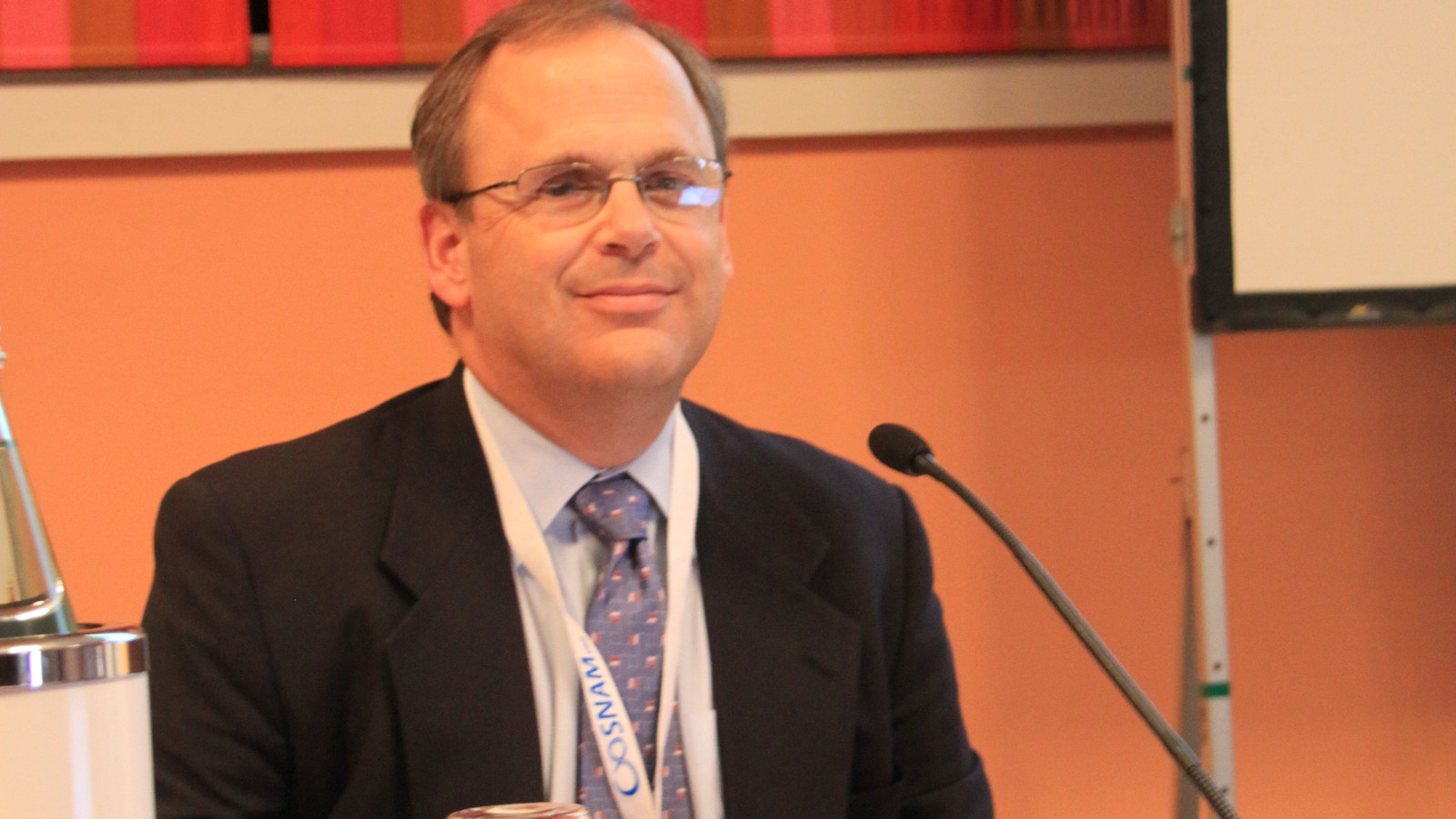
Led by
Carl E. Smith
Treasurer · Finance & Audit Chair
Carl led a national nonprofit for more than 12 years. As Treasurer and Finance & Audit Chair, he stands behind the numbers on this page: budgets, reporting, and the annual audit.
Meet the board →Who we are
The Kopp Foundation for Diabetes is a Pennsylvania nonprofit corporation (entity no. 14166124), formed March 5, 2025. The IRS recognizes it as a 501(c)(3) public charity. EIN: 33-3787810. Address: 632 N 2nd St, Philadelphia, PA 19123. Pennsylvania charitable solicitation registration (BCO-10) no. 123090. Our fiscal year is the calendar year.
Governance
Officers: Maximilian B. Kopp, President.
Board of Directors (8): Dr. Conan Tu (Chair); Dr. Maria Kondratyev (Vice Chair); Carl Smith, CPA (Treasurer); Dr. Alexander Stojadinovic (Secretary); Elena Mack (Director; Chair, Fundraising); Kevin Matasich (Director; Chair, Marketing & Communications); Sabrina Guo (Director; Chair, Governance & Nominating); Katherine Yang (Director). Its members include practicing physicians, medical researchers, and a chief executive.
How the board works. The Board of Directors meets quarterly. Meetings are documented in minutes, which the board approves. Directors serve without compensation. The board adopted the foundation’s bylaws on December 8, 2025, amending them the same day to state expressly that no part of the foundation’s assets shall benefit private individuals, including board members, except reasonable compensation for services rendered. The Governance & Nominating Committee reviews the bylaws at least every two years.
Standing committees. Seven committees operate under written charters: Governance & Nominating; Finance & Audit, which oversees financial reporting and who is authorized to pay bills and approve expenditures; Programs; Fundraising; Marketing & Communications; Youth Ambassadors; and Partnerships & Innovation.
Policies adopted by the board on December 8, 2025: Conflict of Interest Policy (every director reviews and signs it annually); Whistleblower Protection Policy; Document Retention and Destruction Policy; Board Recruitment and Selection Policy; Board Member Responsibilities Policy; Board Evaluation and Removal Policy.
Why a parent’s name is on the legal work. Max Kopp began building the foundation in 2023, when he was under 18. A minor cannot incorporate a nonprofit or execute its legal filings, so his parent, Li Kopp, carried out the incorporation and the related legal formation work on his behalf, and serves as Governor for governance and compliance. Max has directed the foundation’s mission, programs, and chapters from the start, and does the foundation’s day-to-day work himself, together with the student presidents who run each campus chapter. Outside support is limited to contracted services such as public relations.
How our chapters are governed
The foundation’s 12 chapters: Arizona State University; Drexel University; Michigan State University; Temple University; University of California, Los Angeles; University of California, San Diego; University of Massachusetts Amherst; University of Michigan; University of Pennsylvania; University of Pittsburgh; University of Southern California; and the University of Washington.
Every chapter operates under a signed Chapter Charter Agreement with the foundation and a written chapter playbook issued by headquarters. The system is the same on every campus:
- Leadership. Each chapter is led by three people: a president, a vice president who is not a senior and is the named successor, and a faculty advisor who agrees in writing to advise the chapter. The vice president succeeds automatically; before a president’s final semester, a documented handover (accounts, funds, registration status, member list, calendar) is completed.
- Registration. Each chapter registers as a student organization with its university under its own constitution, renews annually, and sends headquarters its approval confirmation and renewal date.
- Money. Funds a chapter raises on campus stay in the chapter’s university account and are spent on campus programming under university rules. No chapter may open an outside bank account without written guidance from headquarters.
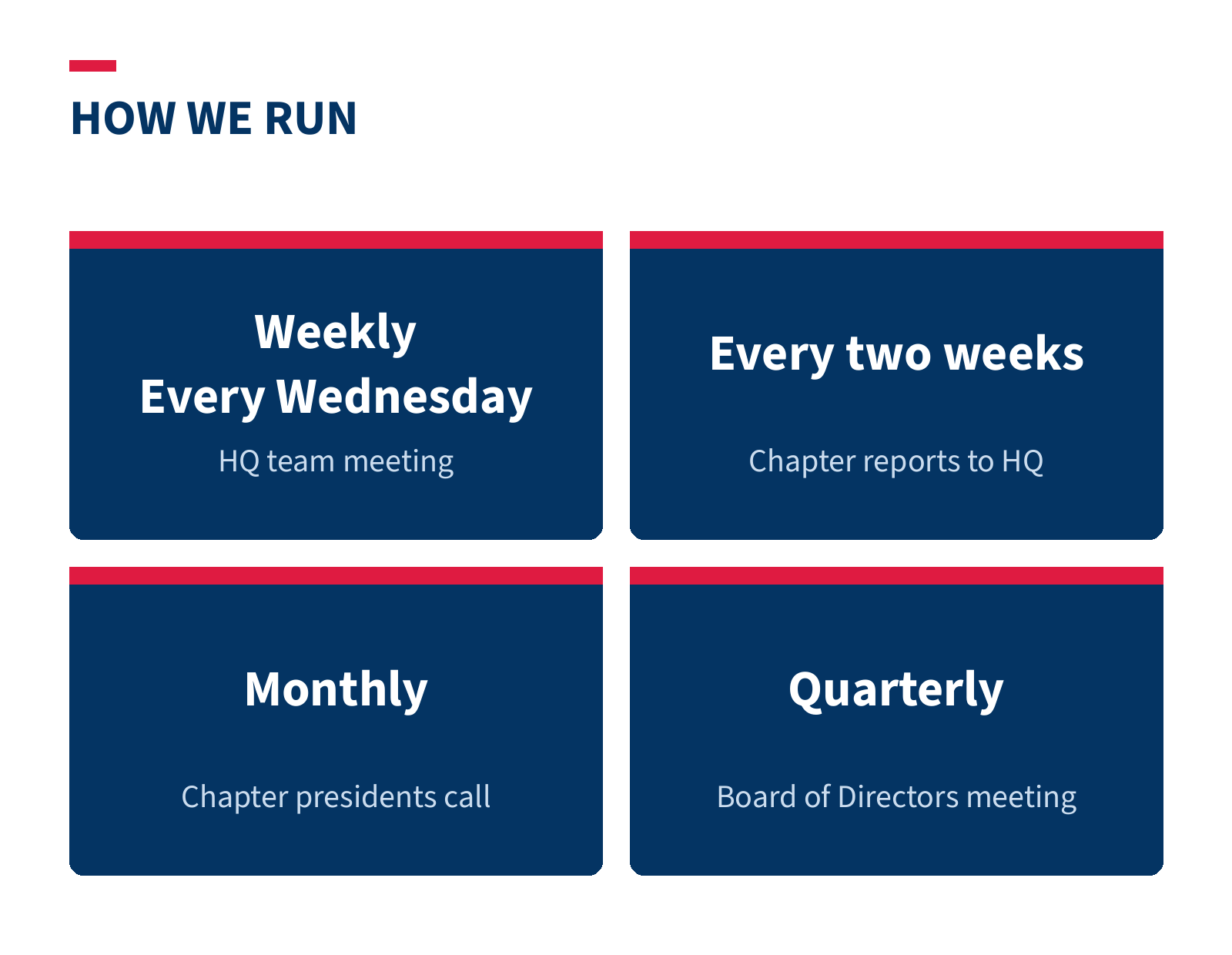
- Reporting. Every chapter reports to headquarters every two weeks. Chapter presidents join a monthly 30-minute call with the headquarters coordinator. Events are reported with photos and a written story within a week, attendance sign-ups run through a shared national system tagged by chapter, and activities are recorded in the foundation’s activity log with dates, locations, and participation. Headquarters holds a weekly Wednesday meeting.
- Oversight. Headquarters tracks every chapter’s registration, leadership, and activity. Headquarters stays in direct contact with each chapter and supports it through its vice president and faculty advisor.
Chapters run on their own university calendars: some meet weekly and run monthly events, and newer chapters are completing university recognition and building their first programs. Each chapter also works within its own university’s rules and guidance for student organizations, which set its registration, constitution, and funds requirements.
Our network has 12 university chapters at different stages of development. Five campuses have publicly documented education and science activity: Michigan State, UCLA, the University of Washington, USC and UMass Amherst. Chapter-reported members are counted from membership reports the chapters submit to headquarters; the total is the sum of the reports on file, rounded down (reports on file as of November 2026: 2,021). The per-chapter table is in How We Count below and is updated as reports are received. Michigan State reports 29 core members (a core-member count, a different measure), which is not added to the membership total. Membership reports are added as each chapter confirms its roster. We keep a dated, sourced record of chapter and headquarters activity — 35 activities from October 2025 to November 2026 — and our standard logs attendance for every session. Our October 8, 2025 national leadership forum featured Dr. Conan Tu tracing a century of insulin innovation. Online audiences are reported separately on this page and are never added to campus figures.
The Chapter Launch Kit
Every new chapter receives the same numbered startup kit from headquarters:
- Youth Ambassador Chapter Summary
- Youth Ambassador Chapter Handbook (Training)
- Strategic Plan Example
- Constitution Template
- Social Media Guide
- Interest Meeting Agenda
The kit also includes a worked example: a completed chapter constitution (University of Pennsylvania).
Chapter money runs on written rules. Chapter fundraising moves only through foundation channels — Givebutter or the foundation’s Venmo account, never a personal account — and funds a chapter raises on campus stay in the chapter’s university account, spent on campus programming under university rules. Each chapter keeps a standard tracker, updated before its weekly call with the headquarters coordinator.
How We Count
Chapters
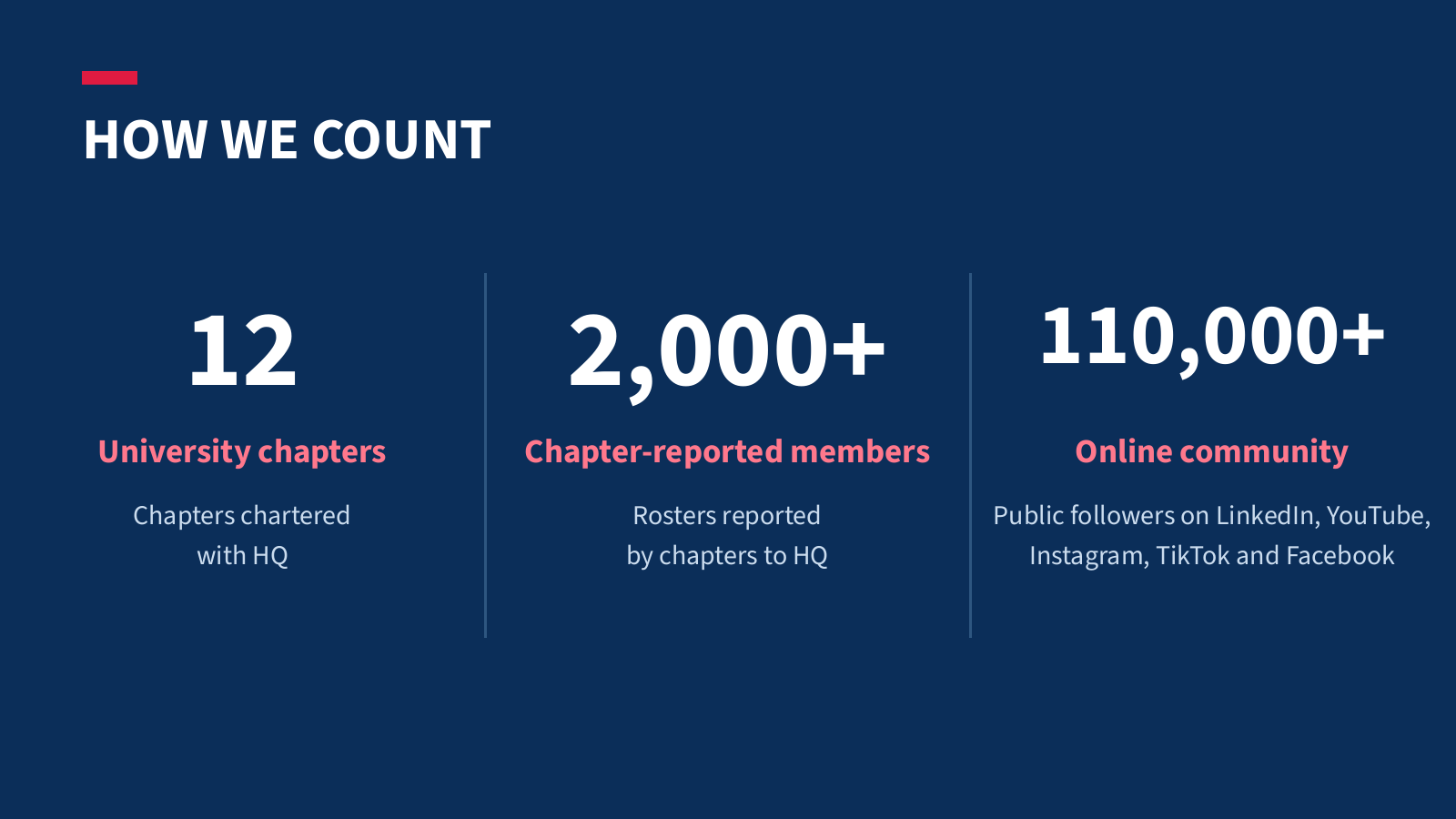
The foundation has 12 campus chapters, each under a signed Chapter Charter Agreement, named by university (listed above).
Chapter-Reported Members
Chapter-reported members are counted from membership reports the chapters submit to headquarters; the total is the sum of the reports on file, rounded down (reports on file as of November 2026: 2,021). The per-chapter table is below and is updated as reports are received.
| Chapter | Reported members |
|---|---|
| Arizona State University | Forming — completing university recognition |
| Drexel University | Forming — completing university recognition |
| Michigan State University | 29 core members* |
| Temple University | Forming — completing university recognition |
| University of California, Los Angeles | Active chapter |
| University of California, San Diego | Active chapter |
| University of Massachusetts Amherst | 2,021 · June 2026 |
| University of Michigan | Forming — completing university recognition |
| University of Pennsylvania | Active chapter |
| University of Pittsburgh | Forming — completing university recognition |
| University of Southern California | Active chapter |
| University of Washington | Active chapter |
Sum of membership reports on file: 2,021 — published as 2,000+.
Chapters are founded by students and recognized through each university's own process, which typically takes an academic year from founding to full recognition. Membership reports are filed with headquarters as each chapter confirms its roster.
*Core-member counts are a different measure from membership reports and are not added to the membership total.
Online community
The online community across our active official channels is the combined followers of those channels.
| Channel | Followers / subscribers as displayed |
|---|---|
| 8,663 followers | |
| YouTube (@KoppFoundationforDiabetes) | 1.66K subscribers |
| Instagram (@koppfoundationfordiabetes) | 297 followers |
| TikTok (@KoppFoundationT1D) | 3 followers |
| 99K followers | |
| Total | 110,097 — published as 110,000+ |
Counted November 9, 2026; figures are the channels' displayed follower counts. YouTube displays a rounded figure (1.66K); the sum uses 1,660. Facebook displays 99K; the exact total in Insights is 99,474, which is the figure used in the sum.
See what the chapters are doing on the Chapter Impact page.