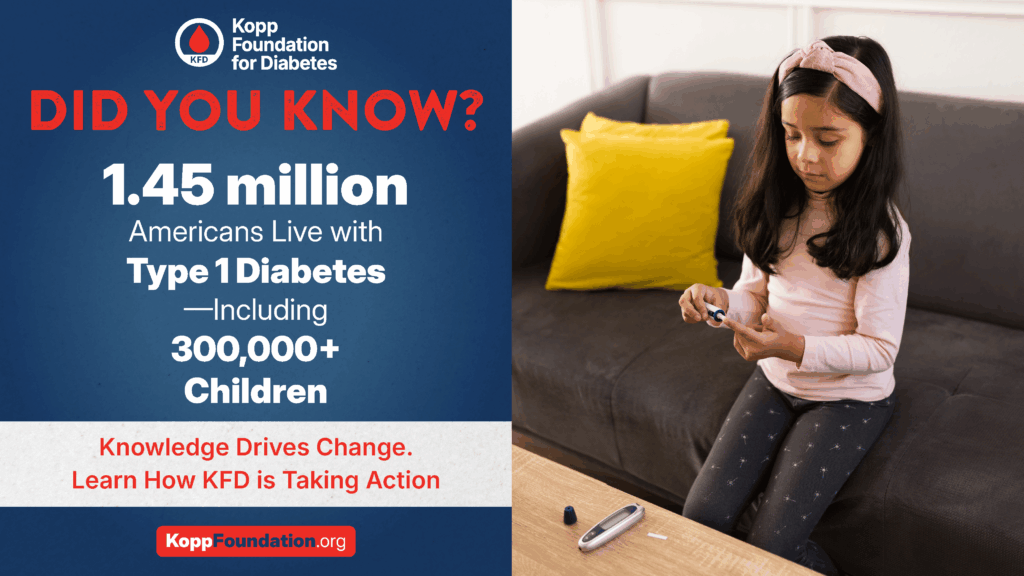
For most of the history of diabetes management, checking your blood sugar meant one thing: a sharp needle, a drop of blood, and a small machine that would tell you a number. Multiple times a day, every day, forever.
That reality is changing, and the pace of change is accelerating. Here is where glucose monitoring technology stands today, and where it is headed.
The Old Standard: Finger-Prick Testing
Traditional blood glucose meters have been the cornerstone of T1D management since the 1970s. They are accurate, affordable, and widely available. But they have serious limitations:
- They only measure blood sugar at a single point in time, a snapshot rather than a continuous picture
- They require a painful finger prick every time
- They provide no warning before blood sugar becomes dangerous
- They cannot be used safely while sleeping, driving, or exercising without constant interruption
The CGM Revolution
Continuous Glucose Monitors (CGMs) changed everything. A small sensor inserted under the skin measures glucose levels every few minutes, transmitting data wirelessly to a smartphone or receiver.
- Real-time data instead of sporadic snapshots
- Trend arrows showing whether blood sugar is rising or falling and how fast
- Alerts that wake you up if your blood sugar is dropping dangerously low
- Integration with insulin pumps to create semi-automated insulin delivery
Studies consistently show that CGM use dramatically reduces dangerous low blood sugar events, improves average blood sugar control, and reduces the psychological burden of T1D management.
The Next Frontier: Non-Invasive Biosensors
The current generation of CGMs still requires inserting a small sensor under the skin, a minor procedure that some patients find uncomfortable and that creates barriers to adoption, particularly in pediatric patients and in underserved communities.
The next breakthrough is non-invasive sensing: measuring blood sugar without breaking the skin at all, through light, sweat, or other biological signals.
This is exactly the technology that KFD Founder Max Kopp is researching. His published work on nanomaterial-based biosensors explores how engineered materials can detect glucose through optical signals, potentially enabling a future where T1D monitoring is as simple and painless as wearing a watch.
Why Access Matters
CGMs cost hundreds of dollars per month without insurance. Insulin pumps can cost thousands. For the millions of T1D patients who are uninsured, underinsured, or simply cannot afford these tools, the technological revolution in diabetes care has passed them by.
KFD’s mission is to change that, through direct financial assistance, advocacy for insurance coverage, and the development of more affordable next-generation technologies.